If you want to start working with influencers but don’t know where to start, you’re not alone. Many brands pose the same fundamental questions:
- How can I identify creators who fit my brand?
- Which influencers are genuine, and which have false followers?
- Should I hire an agency or use influencer marketing software?
- What platform are people using to hire creators?
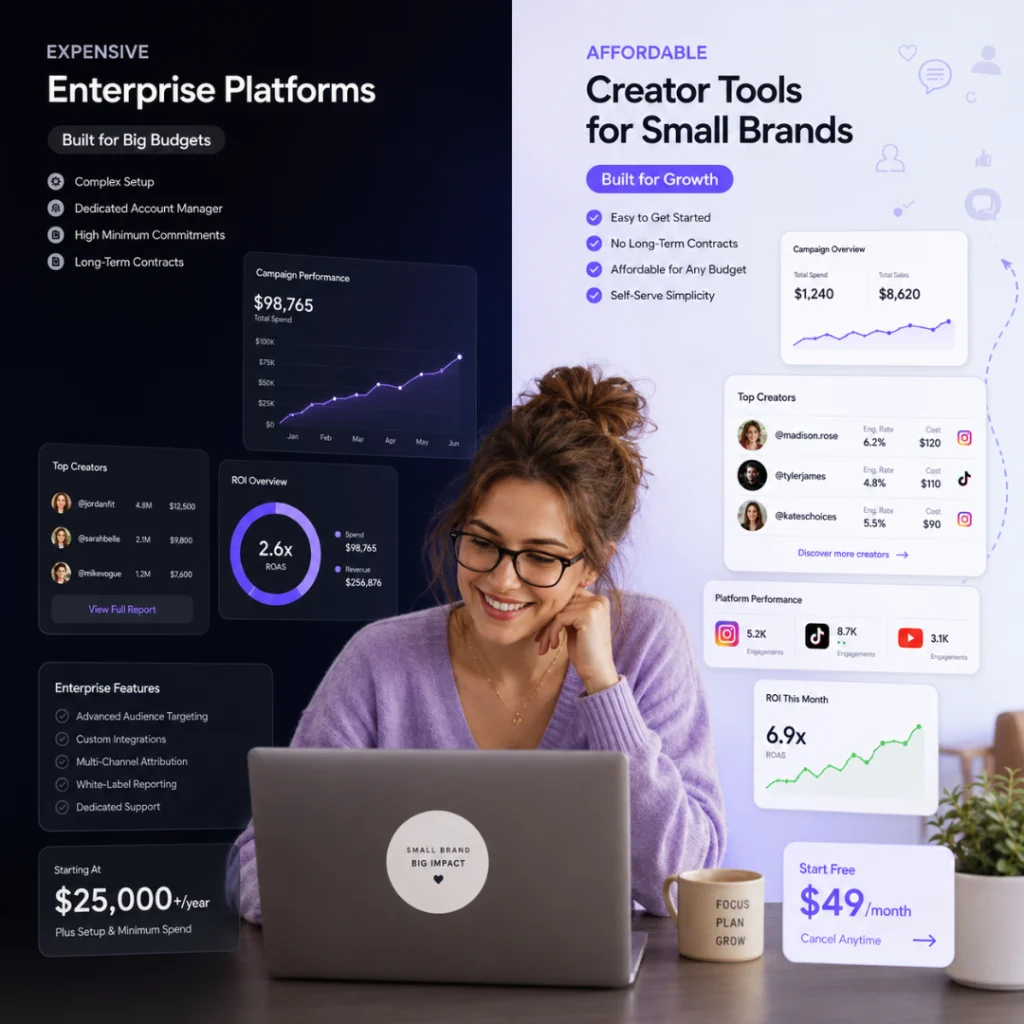
There is a lot to learn, from how to get started to selecting the correct program! When you start looking at influencer marketing solutions, you may come across GRIN. While it’s a popular choice, many small businesses find it prohibitively pricey and complicated. Today, there are numerous accessible solutions created expressly for lean teams and limited resources.
This post delves into the best GRIN alternative platforms for small firms, compares pricing and features, and demonstrates how to select the finest influencer marketing software for your business.
Key Takeaways
- Small brands do not require corporate technologies to operate successful influencer marketing.
- Transparent pricing is important: some GRIN alternatives include pay-per-creator or month-to-month subscriptions, which makes budgeting easier.
- The best influencer marketing software for your organization is ultimately determined by aspects such as team size, budget, timeframe, campaign kind, and reporting requirements.

Creator Marketplace Comparison: Five Best GRIN Alternatives
If you’re looking for the finest GRIN alternative, these five platforms routinely rank as the top influencer marketing solutions.
1. Skellup
Skellup is a creator marketplace where marketers can rapidly hire vetted influencers and UGC creators from TikTok, Instagram, and YouTube. Skellup, unlike GRIN, is designed for speed, transparency, and adaptability, making it one of the most powerful influencer marketing platforms for small teams.
Why Skellup stands out.
- Open the marketplace and search for creators by niche, platform, and pricing.
- There are no long-term contracts or minimum spends.
- Integrated payments, messaging, and deliverables
Best for: Small brands that require quick creator hiring.
2. Aspire
Aspire provides influencer relationship management features with a deeper CRM focus than Collabstr, making it a popular choice for brands transitioning from creator markets but not quite ready for the GRIN price range. It’s intended for teams who wish to manage continuous creator connections across numerous campaigns rather than hiring creators as needed.
Ideal for: Mid-market teams running recurring campaigns.
3. Creator IQ
CreatorIQ is frequently mentioned as a GRIN alternative, although it is designed for huge corporations managing influencer programs on a worldwide basis. It provides powerful creator discovery, thorough analytics, and brand safety capabilities to help with complex, multi-market campaigns.
Best for global enterprise brands.
4. Modash
Modash is a discovery-first influencer marketing solution that enables brands to search for and evaluate artists on platforms such as Instagram, TikTok, and YouTube. Its primary strengths are influencer discovery and audience data, rather than end-to-end campaign execution. Because of this, Modash is frequently utilized as part of a larger influencer stack rather than as a stand-alone solution.
Ideal for: Brands with internal influencer marketing teams.
5. Heepsy.
Heepsy is a lightweight influencer discovery platform that allows marketers to find and analyze influencers across social platforms using simple audience and performance filters. It is widely utilized by startups and early-stage firms that are new to influencer marketing, but it requires manual outreach, negotiation, and campaign administration outside of the platform.
Best for: budget-conscious early-stage enterprises.
Cost Comparison: Influencer Platforms
How do these five GRIN alternatives stack up from a pricing perspective? Let’s take a look:
| Platform | Pricing Model | Cost | Contract Required | Best For |
| Skellup | Pay-per-creator or subscription | 10% marketplace fee (pay-per-creator) | ❌ No | Small brands & UGC |
| Aspire | Subscription with a minimum contract | Custom | ✅ Yes | Scaling teams |
| CreatorIQ | Subscription with a minimum contract | Custom | ✅ Yes | Enterprise brands |
| Modash | Monthly or annual subscription | Starting at ~$199/month | ❌ No | Mid-large teams |
| Heepsy | Low-cost subscription | Starting at $44/month with free features | ❌ No | Early-stage brands |

Which Is the Best Influencer Marketing Software?
There is not a single “best” tool for each brand. The best influencer marketing software is determined by your campaign strategy, team size, budget, and the speed with which you need to activate producers. The following are the most essential elements influencing platform choice.
Team size and internal resources
One of the most important considerations when selecting influencer marketing software is the number of personnel who will actively oversee campaigns.
Small teams benefit from tools that eliminate operational complexity and reduce human labor. Larger teams may require approvals, procedures, and multiple user access. Many brands overestimate their internal bandwidth and select platforms that are overly complex for their actual requirements.
Budget & Pricing Model
Pricing varies greatly across platforms; many brands request cost comparisons. Most tools belong to one of three models:
- Pay per creator (marketplaces)
- Monthly SaaS subscriptions
- Annual contracts with minimal spend.
Flexible pricing lowers risk and enables firms to try influencer marketing without making long-term commitments. There are also influencer marketing tools with free functionality, which is an excellent way to get started!
Speed of launch
Speed is an important—but frequently overlooked—factor in influencer marketing efficacy. If you’re doing seasonal ads, trend-driven TikTok activations, or quick testing cycles, creator access speed is more important than feature depth.
Platforms that need extensive onboarding or manual outreach can cause delays in execution.
Discover and match creators
Brands frequently question how to locate creators who match their brand, and the answer is dependent on how discovery works within the platform.
Some tools use manual searches, cold outreach, and off-platform negotiating. Others provide pre-vetted creators, clear pricing, and built-in communication to eliminate friction.
Campaign Type: Influencer vs. UGC
The ideal venues for micro-influencer campaigns are often not the same as those used for celebrity endorsements.
Ask yourself:
- Are you interested in user-generated content or reach?
- Do you require usage rights?
- Is it more important to focus on performance or awareness?
UGC and micro-influencer efforts frequently work better with simpler, more adaptable tools. If you’re planning a UGC campaign, here are the top sites for 2026.
Platform coverage and reporting needs
Not every tool prioritizes the same platforms. Some are better suited to TikTok, while others excel at Instagram and YouTube. Choosing software that is matched with your major channel enhances creator matching and results.
Similarly, the reporting requirements vary. Many small brands merely need deliverable tracking, content rights, and basic metrics—advanced attribution models are typically unneeded at first.
Try Skellup Today
If you’re comparing influencer marketing platforms and wondering which one people use to recruit creators, Skellup is designed expressly for that. Unlike any other platform, you can explore an open marketplace of artists, review prices up front, and reach creators directly—all without a demo call or contract.
Start hiring creators and launching campaigns faster with Skellup.
TL;DR
The greatest GRIN option for small firms is a creator marketplace rather than enterprise software. Platforms like Skellup provide speedier recruiting, lower expenses, and greater outcomes for micro-influencer and UGC campaigns, making them the best option for small enterprises.
Best GRIN Alternatives: Frequently Asked Questions
Which are the most successful influencer marketing tools?
The most effective influencer marketing tools are creator marketplaces and lightweight platforms with low friction. Skellup and similar tools consistently outperform enterprise software for small brands, allowing for faster launches and clearer ROI.
Which are the greatest platforms for micro-influencer campaigns?
The most effective micro-influencer campaign platforms focus on creator quality, specialized filtering, and transparent pricing. Skellup and other creator markets flourish in this category, particularly for TikTok and Instagram advertising.
What is the difference between Skellup and GRIN?
The distinction between Skellup and GRIN comes down to who they are designed for. GRIN focuses on large organizations with complex procedures. Skellup is intended for brands seeking to swiftly hire creatives without long-term contracts, exorbitant costs, or extensive onboarding.
What platform is most commonly used to hire creators today?
More brands are turning to creative markets to find out which platform individuals use to hire creators quickly and transparently. Marketplaces remove cold outreach and manual negotiating.
How can I identify creators who fit my brand?
The quickest approach to identify creators who fit my brand is to use platforms that offer specialized filters, audience data, and upfront pricing, allowing you to vet creators before reaching out.